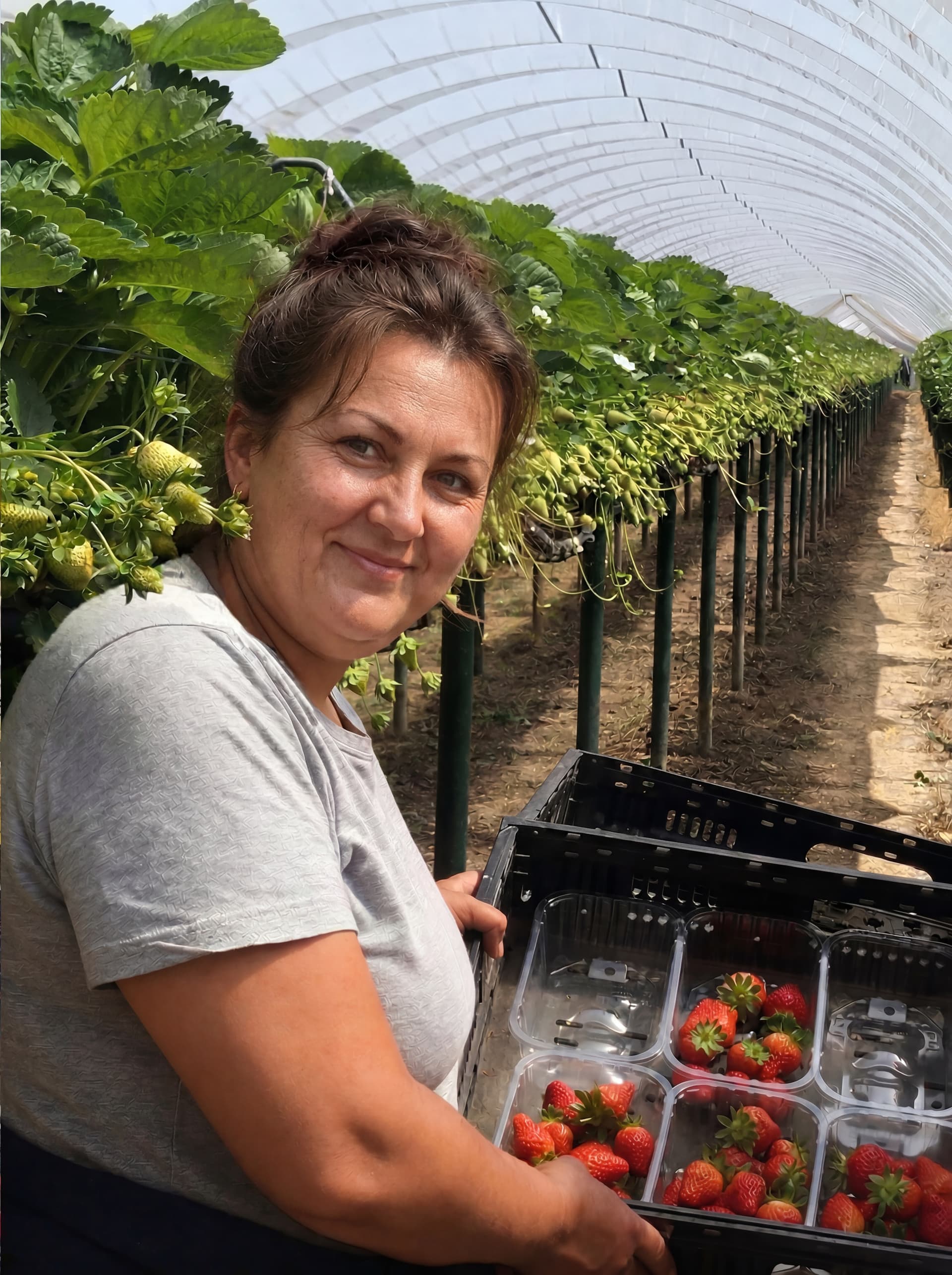
Eastern European seasonal workers in Western Europe: the unsung backbone of European agriculture
Every spring, tens of thousands of people from Romania, Poland, Bulgaria, Hungary and Ukraine pack their bags and head west. Not to settle permanently — but to pick strawberries in Belgium, harvest asparagus in Germany, work in greenhouses in the Netherlands and in the vineyards of France. They are part of a vast, largely invisible workforce that sustains food production in Western Europe, yet their cultural and economic contribution rarely comes into the public spotlight.
Why they leave
The pay gap is the strongest factor. As of 2023, the average gross monthly wage in Bulgaria is around €1,005, compared to an EU average of €3,417. Similar differences exist in Romania, Poland and Hungary. For a seasonal worker, one summer abroad can be equivalent to a whole year’s salary at home.
The skills match is also a natural one. Agriculture accounts for a larger share of employment in Eastern European countries, meaning that workers arrive with the experience and physical stamina sought after by Western European farms.
Meet Petya
Petya is 34 years old from Bulgaria and has been working seasonally in agriculture in Belgium, Germany and the Netherlands for six consecutive years. We asked her how it all began and what keeps her coming back.
What made you go abroad for the first time?
“My cousin had gone a year earlier and came back with good money. I was working here, but the pay wasn’t good, so I decided — why not give it a go for a season? That was six years ago.”
What kind of work did you do and where?
“I started with strawberries in Belgium, in Flanders. The first season was outdoors – long days, but good pay and a well-organised farm. After that, I worked with asparagus in Germany for a few years, which is harder on the back. Most recently, I’ve been in a greenhouse in the Netherlands with tomatoes and peppers – more repetitive work, but at least no rain.”
How did you find Belgium compared to other countries?
“Belgium was a good place to start. There were lots of Eastern Europeans, so you don’t feel alone. The farmers are straightforward — they tell you what they want and let you get on with the work.”
What’s it like working with local farmers?
“Generally good. Most are fair — the work has to be done and that’s that. Some are friendlier than others. One farmer in Germany remembered everyone’s names — little things like that make a difference.”
Would you recommend it?
“Yes, if the conditions are good and you know what to expect. It’s not a holiday, but it’s honest work and the pay is better than at home. It’s important to know your contract in advance.”
The figures behind Petya’s story
Petya’s story is repeated hundreds of thousands of times every year in Western Europe.
Germany takes in around 300,000 seasonal workers a year, mainly from Central and Eastern Europe.
The Netherlands employs nearly 70,000 people in greenhouse production alone, with Eastern Europeans making up the bulk of the workforce.
Belgium reported a significant increase in agricultural labour productivity in 2023, aided by a steady flow of seasonal workers.
France is also among the countries with the highest number of seasonal workers, particularly in viticulture and fruit growing.
The cultural impact
Their contribution is not limited to the hours worked. Eastern European workers bring with them traditions, customs and a strong work ethic. On many farms, a unique working language has emerged — a mixture of Dutch, Romanian, Bulgarian and English. This is a small but tangible form of European integration.
The harsher reality
A large proportion of workers receive low wages, work long hours and often face precarious conditions.
Around 32% of those employed in agriculture in the EU do not have a written employment contract — compared to just 5% in other sectors. For people far from home and with limited language skills, this is a serious risk. Accommodation conditions also remain a problem, particularly following COVID-19 outbreaks linked to overcrowded housing in Germany and the Netherlands.
A figure worth remembering
Estimates of the number of seasonal workers in the EU range from 650,000 to 4 million. The actual number is unknown, as many people remain unregistered.
What is certain is that without Eastern European seasonal workers, the fruit and vegetable shelves, as well as the wine glasses in Germany, France, Belgium and the Netherlands, would look very different. And behind every statistic stands a person like Petya — who does the maths, packs her bags and sets off.